

the vulnerability attached to native languages
Why is expressing myself in my native language harder?

I know it’s been a moment, school has been demanding but thank you for the recent growth.
I pride myself in being a person who will watch, read, listen to anything if I deem it interesting enough; subtitles and translations barriers too small to limit my art consumption. Whenever I consume any foreign media words of endearment always stick out to me from movies entirely in a foreign tongue to books with traces of an unfamiliar vocabulary with a glossary at the back. The words often occupy a designated portion of my brain the reasons being my love for love and my envy towards people who can shamelessly express themselves in their mother tongue something that’s harder for me to do than it should be.
Nkem- my own in igbo
Elkaskan min- my love in Icelandic
Mudiwa- my love in ShonaMeu coração - my heart in Portuguese
Sthandwa sami - my love in Zulu
Yeobo- darling in korean
Meri jaan- my life in hindi
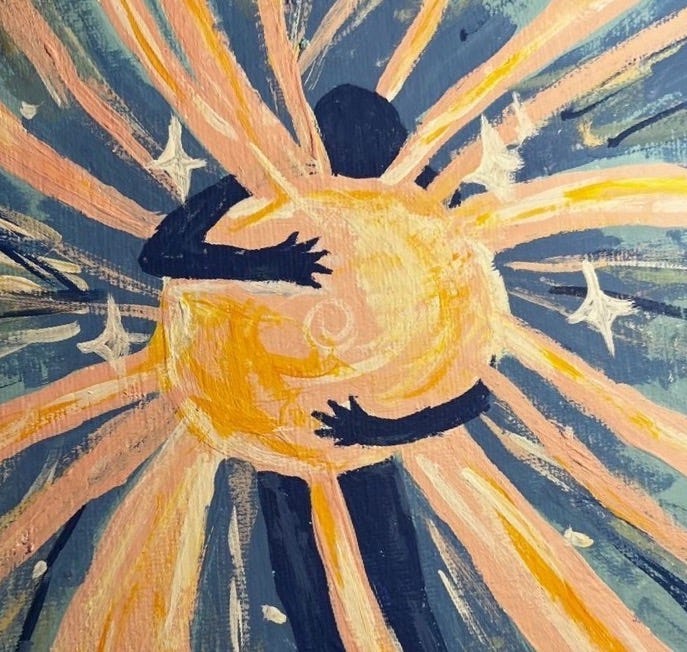
I find expressing my feelings a difficult task and doing it in my native tongue an immovable mountain. My feelings towards my mother tongue are frustratingly mixed. I’m proud of my roots yet expressing myself fully in it feels a bit too vulnerable and ashamedly awkward. A feeling bilingual people sometimes have; the vulnerable part that is. The root of my bilingualism is colonialism which was partly successful in the supplanting of my native language.
I’m from Zimbabwe, if you’re new here. It was once a British colony and like any other ex-colony we speak the language of our previous colonisers. The majority of Zimbabweans—as is mandated in schools—speak English and one native language. Mine is Shona which is one of the tribes in the nation. I had recently began to feel somewhat dissatisfied with how the average conversation between two natives has traces of or is entirely in English. A cloud of unfamiliarity lingers when conversing entirely in Shona. I think an effect of colonialism we don’t often discuss is the displacement of language. Some countries had their native tongues reduced to a second language or almost entirely eroded.
In Zimbabwe native languages were not eroded but they weren’t unaffected either. I think what fuels the lack of tribal/linguistic pride in my case is the lack of “major” tribal diversity in my home country unlike in say Nigeria and South Africa, where there are many “major” tribes with which people identify with and whose culture and language they openly and proudly claim. In my opinion having multiple coexisting tribes encourages stronger ties to the language and culture because it makes you different, similar to how being in the diaspora often makes some people a bit more patriotic.
(Howeverrrrrr I’m aware there’s a lot more nuance, history and complexity when it comes to culture and language feel free to share your thoughts)
Everything else aside the depth associated with native languages is seemingly universal. There’s a rawness that expressing myself in my native tongue guarantees. It feels too real akin to ripping my heart out and leaving it on the floor. Even a simple request of asking for water feels like a poetic surrender. It is also incomparably tender and comforting when I’m the recipient. I consider acts of service to be my love language. The acts often open to mental decoding which I find utterly endearing. ”They remembered”, “they noticed” “they did it subconsciously” a reflection that their love for me registered subconsciously. My native language seems to also have a similar direct invisible link to my heart. Whether I’m the orator or the recipient. Verbally nothing will ever mean more to me than my native tongue yet it simultaneously feels awkward almost sacrilegious. A form of surrender I’m not comfortable with.
Perhaps that is why words of endearment always stick out to me when I consume content from other languages. They might not mean the same to me but I have some that are of equal value.
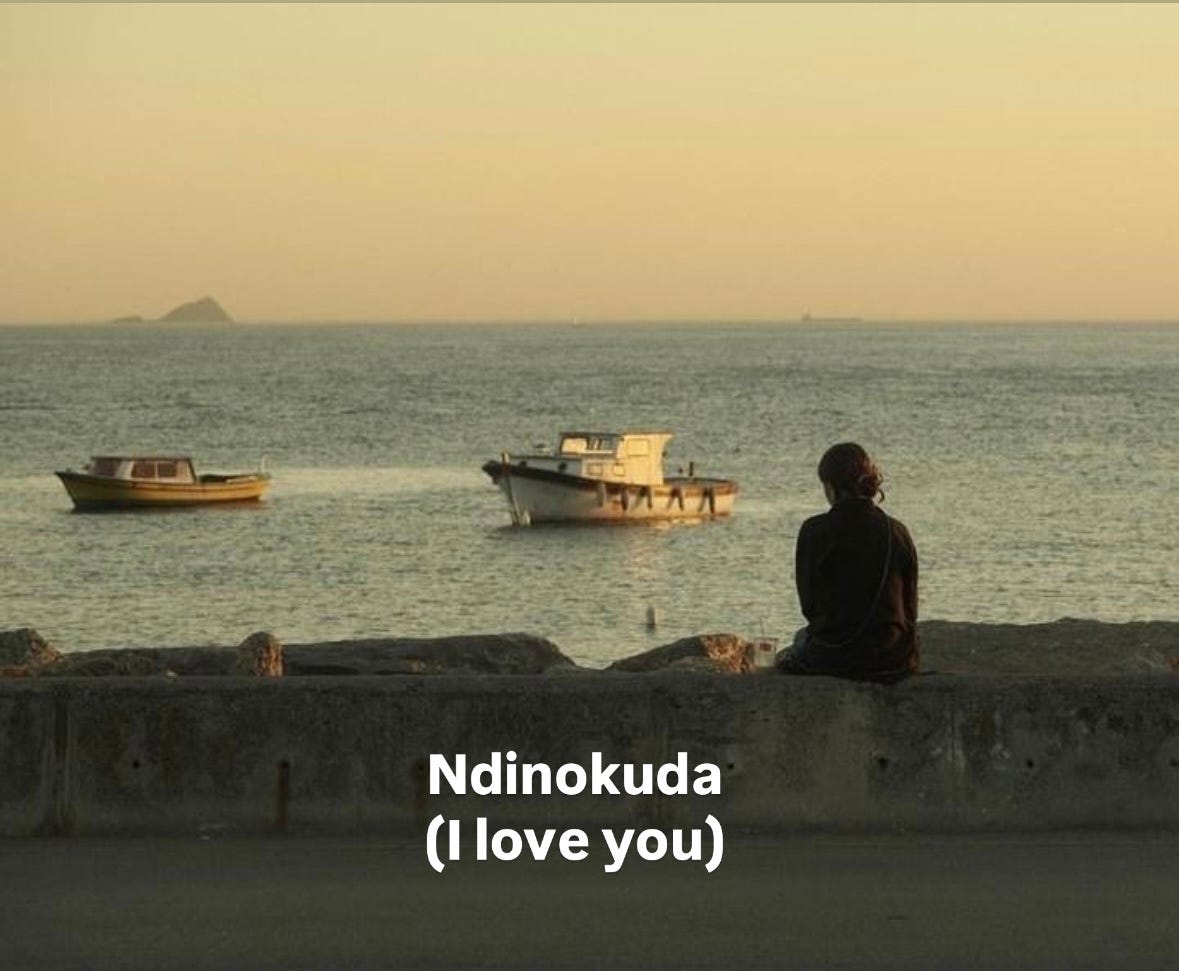
Bonus: Shona songs
Thank you for sharing and I'm so with you on this. I have been making a conscious effort to relearn IsiNdebele (with aspects of Shona to honour more of my bloodline) and I hit a block of such intense self-consciousness around it often. I feel like a huge aspect of this is that my memory of it is still surrounded by my inner child's experiences where our cultures aren't always so welcoming towards emotional vulnerability or topics related to love and sex. It's been one hell of a journey trying to talk sexual pleasure in my native tongue (talking to myself) because the previous brain wiring was that "we don't talk about it" and so my inner child still resists it in case she gets into trouble or she sees it as a novelty to be speaking it and less my lived experience now as adult. The aftermath of colonisation. Phew. This is such an awesome topic that I'm now desiring to delve into further. We appreciate you! 💜
I’ve been increasingly feeling the same way as I grow older and move farther from my mother tongue. It started out with learning foreign languages at school, then we all started to consume media mostly in English (music, content on social media, movies, and even books). Then I moved out of the country and built a new life for myself here. The result of all this being that my native language is now locked away in a box somewhere that is only unlocked once a week when I call my mom. So now speaking it feels like I’m shedding many layers off of myself to get to my core, back to the language I grew up with, back to my childhood and my family. And every time I remember a niche word or a unique idiom, I feel so incredibly infatuated with my own language ❤️🩹